What goes viral · Part 4 of 4
Engagement rate falls as you grow. The biggest hits still obey the rules.
Among the creators we work with, one with 3,000 followers gets nearly twice the engagement per follower of one with 60,000. Across LinkedIn as a whole, the gap vanishes. The size of the account tells you nothing. Choosing the right one does.
September 2026 · 8 min read
Engagement rate falls as accounts grow, among our creators
From 2.202% under 1,000 followers to 0.474% above 50,000. The biggest accounts keep just over a fifth of what the smallest get.
What 3,000 followers earns, among our creators
Compared with 0.47% at 60,000. If you pay by follower count alone, you overpay the biggest accounts.
The biggest hit in our data
It did that many times better than its author usually does. 1,584 characters across 41 lines, from an account with 4,041 followers.
Posts that become hits at 1,000 to 5,000 followers, across all of LinkedIn
Above 50,000 followers it's 5.33%. Among our creators it's 4.51%. Size changes how big a hit is, not how often one comes.
01 · The curve
The rate falls fast up to 20,000 followers, then stops falling
The earlier parts were about the post. This one is about the account behind it. Engagement is likes, comments and reposts added together. Engagement rate is that total divided by followers. We call the 196 creators we work with our roster.
Brands decide what to pay a creator as if that rate were the same for every account size. On our roster it isn’t. Across LinkedIn as a whole, it is. Here is why.
We took every roster post where we know the author’s follower count. That’s 11,518 posts. We sorted them into groups by account size, which we call bands, and found the median rate for each band. The median is the one in the middle when you line them all up, so one huge post can’t drag it up or down.
Median engagement rate by follower band
11,518 posts · engagement ÷ followers · our database, 2 Sep 2026
The rate falls 4.6× from the smallest accounts to the largest: 2.20% down to 0.47%. Nearly all of that fall happens before 20,000 followers. Above that it stops: the two biggest bands sit at 0.473% and 0.474%, a tie.
The cause is simple. Followers pile up and never leave. Attention doesn’t stay: people follow you, then stop reading. So followers grow faster than readers, and the rate drops. The flat part is the surprise. Above 20,000 followers the fall just stops.
02 · What it means for buying
Per follower, 3,000 beats 60,000
A creator with 3,000 followers gets an engagement rate of 0.83%. A creator with 60,000 gets 0.47%. The big account gets more in total, because it has twenty times the audience. Per follower, it gets barely more than half as much.
3,000 followers
a small account on our roster
per follower
60,000 followers
twenty times the audience
per follower
A price list built on follower count treats every follower as worth the same. They aren’t.
03 · Checked again
Across LinkedIn as a whole, the rate doesn’t fall
Is that curve a fact about LinkedIn, or about who we picked? To find out, we ran the same test on 13,262 accounts and 8,301,657 posts.
First we cleaned it up. We removed job feeds, bots and anyone posting 30 or more times a month. We also kept at most 400 posts from any one author. That leaves 1,941,394 posts by 9,882 creators. We call it the open index: LinkedIn as a whole, not just the people we picked.
Median engagement rate by follower band, open index
1,941,394 posts · 9,882 creators · engagement ÷ followers
There is no fall. The five bands sit between 0.128% and 0.218% with no pattern. The highest is 10,000 to 20,000 followers, not the smallest. The 44 roster creators who also appear in this data sit at 0.271%, above every band.

The two results don’t fight. They describe different people. Our roster is hand-picked, so a small account gets on it by being unusually good. The open index is everyone, and most small accounts there are quiet: a few hundred followers who scroll past. Put those in the mix and the small-account advantage disappears.
So the buying rule survives, but it’s a rule about who you pick. A 3,000-follower creator is better value once somebody has sorted the ones with a lively audience from the ones with a quiet one. Picked at random, they’re no better than anyone else.
A breakout is a post that does three times what its author usually gets. Breakouts tell the same story. In the open index, every size of account breaks out about as often.
1,000 to 5,000
followers
5,000 to 10,000
followers
10,000 to 20,000
followers
20,000 to 50,000
followers
Above 50,000
followers
Our roster
every size
No account is too big to have a hit. No account is small enough to be promised one.
posts with a known follower count
Out of 11,717. The curve is built on these.
engagement on the middle post above 50,000 followers, in the open index
Compared with 6 at 1,000 to 5,000 followers. Engagement grows as fast as followers do, so the rate stays flat.
followers, the smallest account among the big hits
Santos Ferreira did 37.9× his own average with 801 characters. Small account, not a short post.
04 · The biggest hits
The five biggest posts follow the rules
Medians describe the typical post. Everybody wants the exceptional one. So we took the five roster posts with the highest lift. Lift is how many times better a post did than its author usually does. It's the only fair way to compare an account with 333 followers to one with 28,629.
The five highest-lift posts on our roster
11,717 posts · lift against each author's own average
None of these is a one-line post from a tiny account. Three of the five run past 800 characters, which is several paragraphs. The top one is 1,584 characters across 41 lines. Not one is under 300.
The common belief is that a breakout is short and lucky. Nothing like that is on this list. Here are three of the five, exactly as published.
Sukanya B.
sukanya-bharati · 4,041 followers · 3 Jul 2025
Over the past few months, I've interviewed for Associate Product Manager (APM) and Product Manager (PM) roles at various companies. These are mostly at the growth stage. Here's a compilation of some of the questions I was asked:
✅ Product Improvement
➜ How would you improve WhatsApp?
➜ How would you improve Google Maps?…

Roger Dunn
rogerdunn · 28,629 followers · 26 Jun 2026
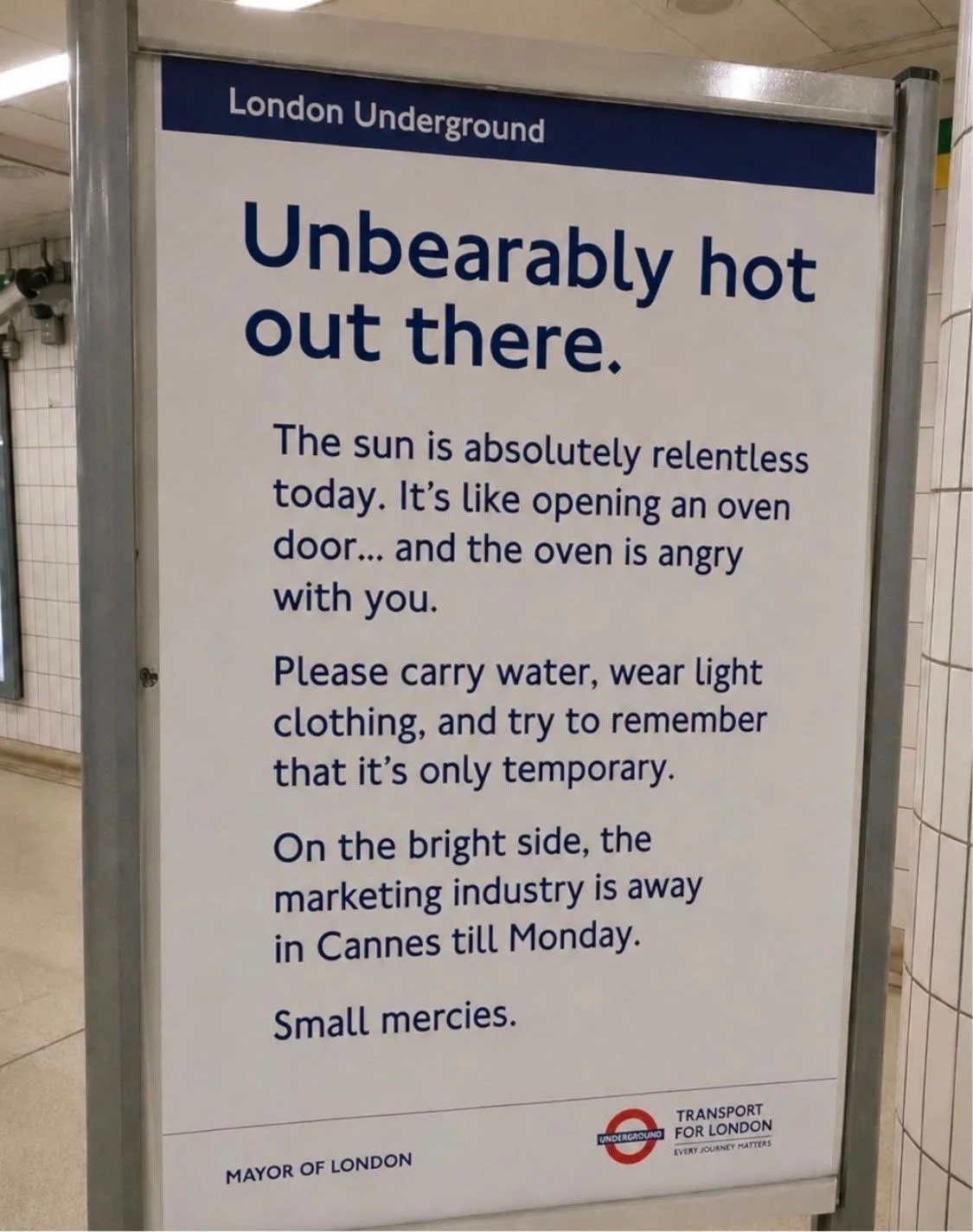
Best bit of copy I saw all week wasn't in Cannes. It was on a Tube platform.
A TfL heat warning that signs off with “the marketing industry is away in Cannes till Monday. Small mercies.”…
Ken Rutsky
kenrutsky · 7,642 followers · 7 Jan 2026
After 2 great years, I have left my role as CMO at Aryaka.
In that 2 yrs I have learned, laughed, fought the good fight and got s#%t done.…
What they share: somebody made something worth reading. A list you’d save. A joke with a real observation inside it. A goodbye that sounds like a person.
Building a post well is how you stop losing. It’s not how you win the lottery.
The biggest hits agree. They’re well-built posts that also caught a bit of luck.
05 · The rows that had to go
Sixty-seven group posts that would have topped the list
LinkedIn has groups: communities anyone can join. A group post gets its engagement from the group, not from the author's own followers. So comparing it with the author's usual post makes no sense. We found 67 and took them out. How we knew:
Group posts, and not one has a comment
Among ordinary posts, 22% have none. One group post claims 11,814 reactions and 1,487 reposts without a single reply.
Typical engagement, group post against ordinary post
The middle post on each side.
The lift the top one claimed
From an account with 475 followers. Left in, it would have topped the whole list.
Removing them barely moved any median. It changed the list of biggest hits completely. A problem too small to move an average can still take over the top of the list.
06 · What to do
Four simple rules
- 1
Price the creator, not the follower count.
On a picked roster, 3,000 followers earns nearly twice the rate of 60,000.
- 2
Don't buy small accounts at random.
Sort the engaged ones from the quiet ones first.
- 3
Expect a hit from any size.
Every size of account breaks out about as often.
- 4
Build the post properly.
The biggest hits are long and well made, not short and lucky.
That’s the series. Next: who to pay for it.
Sources · show
- our production database, 11,717 posts by 196 creators, queried 2 September 2026. The rate analysis uses the 11,518 posts with a known follower count. 67 group posts excluded throughout. Not a controlled experiment, so findings are correlations; some lift belongs to the author, and engagement is the only outcome visible from outside. The roster leans towards India, the US and the UK.
- Corpus check, linklabs.wiki: 8,301,657 posts by 13,262 accounts, cleaned to 1,941,394 posts by 9,882 creators, each author capped at 400 posts. Dates read from each post's activity id. Not an experiment either: it says what the open market looks like, not why.
- Socialinsider, LinkedIn Benchmarks: 1.3M posts from 16,645 company pages, January 2024 to December 2025. Its follower-band engagement-rate figure (2.68% at 1,000 to 5,000 followers, 1.53% above 100,000 followers) could not be confirmed at the cited page and is unverified. Company pages, engagement divided by impressions; ours is personal profiles, divided by followers.
- Buffer, State of Social Media Engagement 2026: 52M+ posts. Cadence (posting frequency) sub-analysis 4.8M channel-weeks from ~161,000 profiles, LinkedIn not included.
- Originality.ai, LinkedIn AI content study: 3,368 long-form posts, 99 profiles, January to November 2025. Both headline findings failed verification.
- Roger Dunn's post: 160 comments in the report, 158 at our latest capture.
- Full report: What actually goes viral on LinkedIn, linklabs.wiki, September 2026.
- Photographs: Pexels, free licence. The three posts and the poster picture are public LinkedIn posts, linked above.