Two hundred small, or twenty large? · Part 2 of 3
Pick the creator, not the size.
We sorted creators by follower count and worked out what each one costs. The gap between size groups is 3×. The gap between two creators of the same size is up to 994×.
September 2026 · 7 min read

Inside one size group
One creator with 5,000 to 20,000 followers costs $0.063 per engagement. Another costs $62.50.
Small-account big posts, six times more common than in 2023
At 5,000 to 10,000 followers, 0.25% of posts now pass 1,000 engagements, against 0.04% in 2023.
A 100-engagement post from a picked small creator
A 5,000 to 10,000 follower account whose typical post already gets 30 or more, at $15 a post. A macro creator picked by size alone: $351.
Of recent big posts could have been paid for
Small-account posts passing 1,000 from 2025 onwards that a paid post on a brand's topic could match.
01 · The spread
Size barely moves the price. The person moves it a lot.
We put 31 creators in three tiers by follower count and looked at what we actually paid for each. An engagement is one like, comment or share. Cost per engagement is a post's price divided by its engagements.
The large tier sells one engagement for $0.31, the small tier for $0.92. Now look inside one tier.
Between the tiers
$0.31 to $0.92
Inside the large tier
$0.043 to $0.96
Inside the mid tier
$0.063 to $62.50
Cost per engagement. Each step along a bar is ten times the last.
The ten cheapest creators we have ever paid cost $0.043 to $0.435 per engagement and come from all three tiers. Sort by size and you sort on the thing that barely changes the price.
02 · Two true answers
Small creators have good days just as often. The good day is worth much less.
Ask “do small creators go viral?” and you get two honest answers from the same 11,729 posts by the 189 creators we work with, depending on how you measure a big post.
Call a post a breakout when it gets three times what its author usually gets, and every size breaks out about as often. Call it a breakout when it passes 1,000 likes, comments and shares, and the odds climb with size. Under 1,000 followers, across 624 posts, it never happened.
Gets 3× the author’s usual: flat
share of posts · 11,729 posts · 189 creators
Passes 1,000 engagements: climbing
share of posts · the same 11,729 posts
The whole corpus says the same. Good days are flat across size. The typical post is not.
Good days: posts that beat their author’s average 3×
1,941,394 posts · 9,882 creators · by follower band
Typical post at 1k to 5k followers
Typical post at 50k+
Twenty-two times bigger. That is what size buys.
Growing does not make a good day likelier. It makes the good day worth more.
03 · The tail
Nobody hires a small creator for the typical post. They hire for the rare big one.
We took 4,125,900 posts by 11,115 accounts and asked how often a post passes 100, 500 or 1,000 engagements.

Buy blind, by size alone. At 5,000 to 10,000 followers a post passes 100 once in 21 posts and 1,000 once in 1,174. A macro creator does it on one post in three and one in 24. At $15 a post against $117, a 100-engagement post costs $315 from the small creator and $351 from the macro, and a 1,000-engagement post six times more.
Now pick instead. Stay at 5,000 to 10,000 followers, choose an account whose typical post already gets 30 or more, and the odds go from one in 1,174 to one in 191.
- Step 11 in 1,174
Bought blind. Any account at 5,000 to 10,000 followers.
- Step 21 in 191
Typical post already gets 30 or more.
- Step 31 in 130
Has passed 1,000 once before.
- Step 41 in 124
Typical post 30 or more, posting in 2025 or later.
- Step 51 in 79
Typical post 100 or more, image or video, 800 or more characters, 2025 on. 67 accounts.
You never leave the size group, and the price is still $15 a post.
| One post that passes | Picked small · $15 | Picked macro · $117 | Macro, blind |
|---|---|---|---|
| 100 engagementsa good day for a small account | $45 | $117 | $351 |
| 500 engagementswhere the two cross | $630 | $468 | $1,053 |
| 1,000 engagementswhat people mean by viral | $1,860 | $1,404 | $2,808 |
Above 50,000 followers the tail did not grow: 2.27% of posts passed 1,000 in 2023, 1.84% now. Something changed on LinkedIn in 2025, in small accounts’ favour.
04 · What the big posts were
A third of them could have been a paid post
A big post from a small account might be a new job or a baby, which no brand can ask for. So we read all 1,083 posts at 1,000 or more from accounts with 1,000 to 10,000 followers and asked whether a paid, clearly labelled post from this creator, on a brand's topic, could get the same response. If yes, buyable.
Buyable Maybe Not buyableFigure is the buyable count
355 of the 1,083 were buyable. From 2025 onwards the share rises to 43%: recent big posts are mostly opinions and how-tos, not announcements.
could never be bought
296 posts: a job change, a life event, a borrowed photo or a thank-you.
of opinion posts were buyable
200 of 287 opinion posts on the author's own field. How-to posts: 89%.
could be written again
591 posts need nothing to happen to the author first.
Two buyable ones.
seemaxkumar
5K–10K · 5,148 followers · 3 May 2022
I have been interviewing people for almost 2 decades, and I've never had anyone mention their therapist in an interview...until last week.
In the last week, 3 different candidates have proactively mentioned some variation of 'I talk to my therapist about this...' in interviews.
I love what this says about the changing view of mental health in our society and the destigmatization of therapy.
daniel-poll
5K–10K · 9,433 followers · 6 Jun 2024
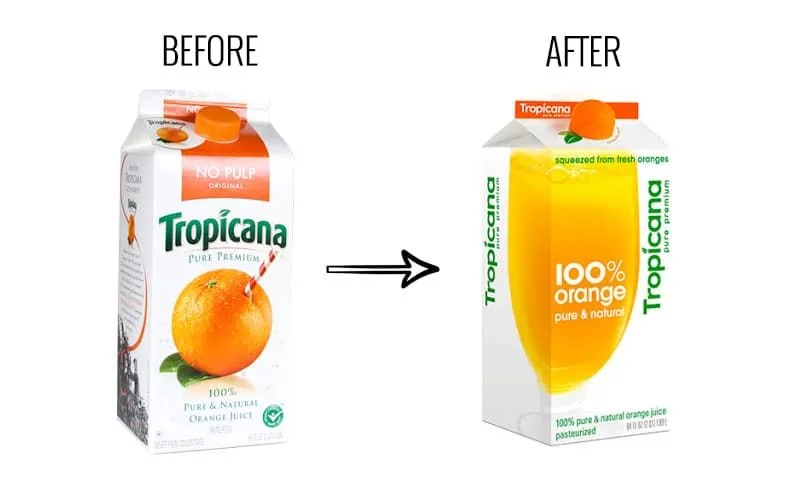
Ever underestimate the power of packaging? This is how Tropicana lost $50,000,000 with that approach.
Picture this: It's 2009. Tropicana, arguably the world's leading juice brand, decides to give its North American packaging a makeover.
However Whilst it is a much better design in many ways 👉 It was a bolder design. 👉 It had unique design cues, like an orange for the cap…
Odds times buyable share: a picked 5,000 to 10,000 follower creator costs $1,860 per 1,000-engagement post and 47% of those are buyable, so about $3,900 a buyable one, against $2,808 for a macro bought blind. At 100 the small creator wins outright: 51% buyable, about $90 each.
Buy creators, not tiers, where you have measured the creator. With strangers, size is the only guide you have.
05 · What to do
Four simple rules
- 1
Book creators again on their measured cost, not their size.
The ten cheapest creators we have ever paid come from all three tiers.
- 2
Stop paying today's mid-tier rates.
The 5,000 to 20,000 group costs $1.30 per engagement, the worst of the three, so pause it or bring prices down towards $20.
- 3
Buy the small tail on the account's record.
Typical post 30 or more, briefed for an opinion or a how-to, bought for posts in the hundreds.
- 4
Use the other small creators to test a message and add voices.
At $15 a post, the cost of finding out is small.
Next in the series: the same $2,000, spent both ways.
Sources · show
- our production database, queried 2 to 3 September 2026: 11,729 posts by 189 creators with a follower count and six or more posts; 54 payout lines across 33 creators, two internal test accounts excluded from prices. Group posts excluded by signature. Paid histories are short, so one cost figure cannot yet separate reliably cheap from a good day. The 200,000+ row is one creator and 100 posts.
- our corpus check: 8,301,657 posts by 13,262 accounts, cleaned to 1,941,394 by 9,882 creators by dropping job feeds, automated accounts and accounts under 10 posts, each author capped at 400.
- our corpus tail pass, September 2026: 4,125,900 posts by 11,115 accounts after dropping flagged job feeds and automation, accounts with 40% or more hiring posts, any 150-post month, and accounts under 10 posts; no per-author cap. That cap is looser than the corpus check's, so the two passes keep different accounts. Reposts were never stored. Group posts carry no marker; their signature, reactions with no comments, is on 0.1% of the 1,000+ set. Identical repeat posts under one author are 3% of cleaned rows and 4% of 1,000+ posts, not deduplicated. Engagements are reactions plus comments plus reposts. Account cells use the lifetime median post. Prices are the deal book's medians: $15 micro, $117 macro.
- Outlier reading, September 2026: all 1,091 posts at or above 1,000 engagements from the cleaned 1,000 to 10,000 bands, 1,083 with a reading, plus random samples of 975 at 500 to 999 and 800 at 100 to 499. One reader classified each, not independently re-verified. The macro tail has not been read, so no buyable share is applied to it.
- Full report: Two hundred small, or twenty large?, linklabs.wiki, September 2026.
- Photographs: Pexels, free licence. Both posts and the second one's picture are public LinkedIn posts, linked above.